Business Phone
051 8439995, 042 35911332

051 8439995, 042 35911332
Mon-Sat: 10.00-18.00
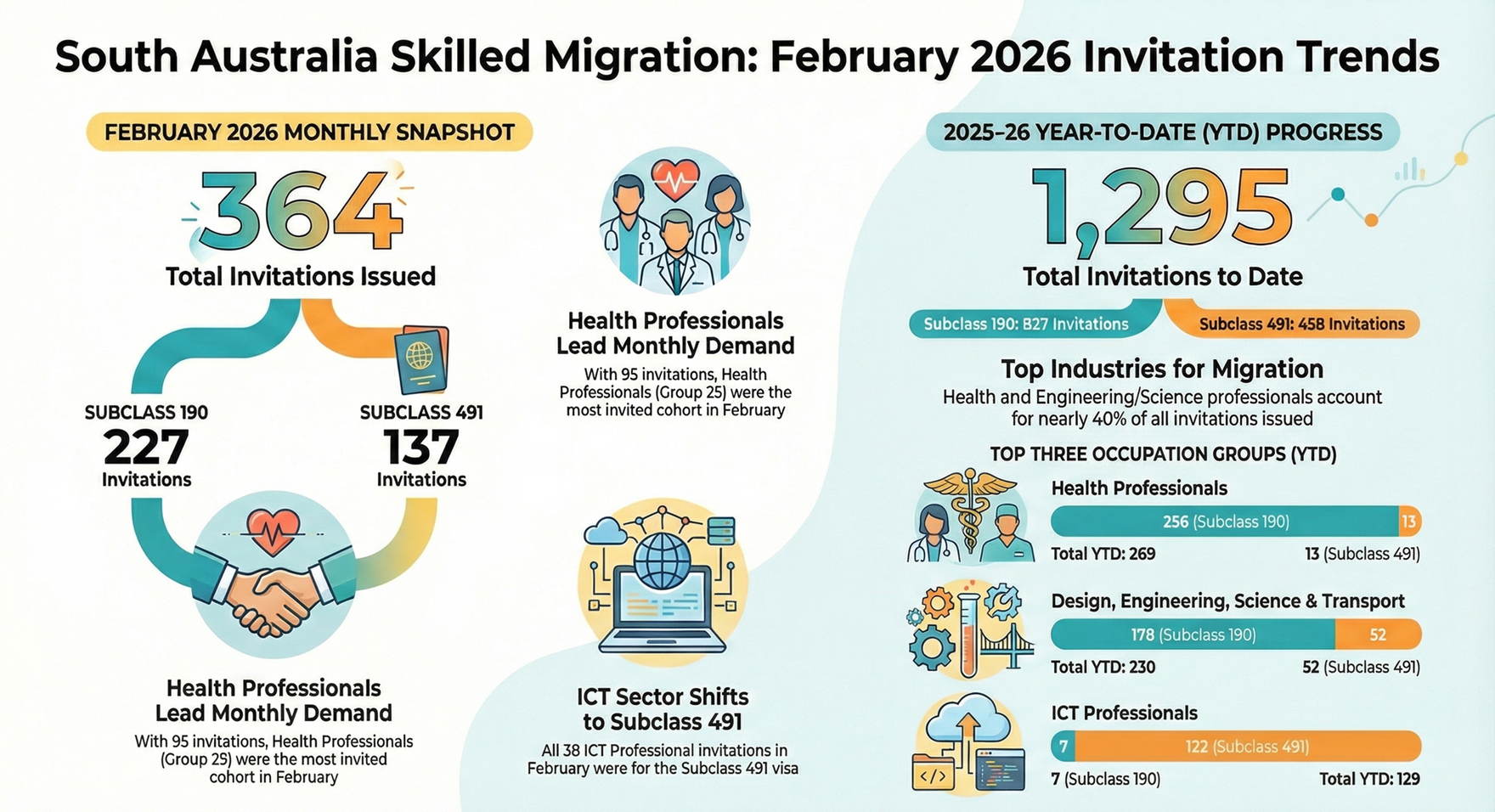
Australia conducted its February 2026 Skilled Migration invitation round on 3 February 2026, reinforcing the government’s continued commitment to addressing workforce shortages under the 2025–26 General Skilled Migration (GSM) program. This invitation round clearly reflects Australia’s demand-driven migration strategy, with a strong focus on priority sectors such as healthcare, engineering, technical trades, and infrastructure-related occupations.
The February round is another strong indicator that Australia’s skilled migration program is moving at a consistent and active pace, particularly for candidates aligned with high-demand occupations.
In this round, a total of 364 invitations were issued across two skilled visa categories:
This distribution highlights the continued importance of state nomination (Subclass 190) while also reinforcing Australia’s regional migration objectives through Subclass 491.
Health occupations remained the top priority in the February 2026 round.
This confirms Australia’s ongoing need for skilled healthcare professionals to support its public health system and ageing population.
These occupations received the second-highest number of invitations, reflecting continued infrastructure and development demands.
Engineering and technical expertise remain critical to Australia’s long-term economic growth.
Interestingly, ICT occupations received invitations only under Subclass 491 in February 2026.
This suggests a strong regional demand for ICT skills, while state nominations under Subclass 190 remained limited for this group during this round.
While lower in number, these invitations indicate selective demand based on specific labour market needs.
Education professionals continue to be considered important, particularly in regional and skills-shortage areas.
Australia’s skilled trades sector remained well-represented in the February round:
These figures highlight Australia’s continued reliance on skilled trades to support construction, infrastructure, and essential services.
Additional occupations that received invitations include:
Some categories did not receive any invitations in this round, including:
This reinforces the importance of occupation selection and timing when planning a skilled migration strategy.
The February 2026 Skilled Migration invitation round clearly demonstrates that:
For skilled professionals who align with Australia’s priority occupation lists, upcoming invitation rounds may represent real opportunities for long-term settlement and career growth.
