Business Phone
051 8439995, 042 35911332

051 8439995, 042 35911332
Mon-Sat: 10.00-18.00
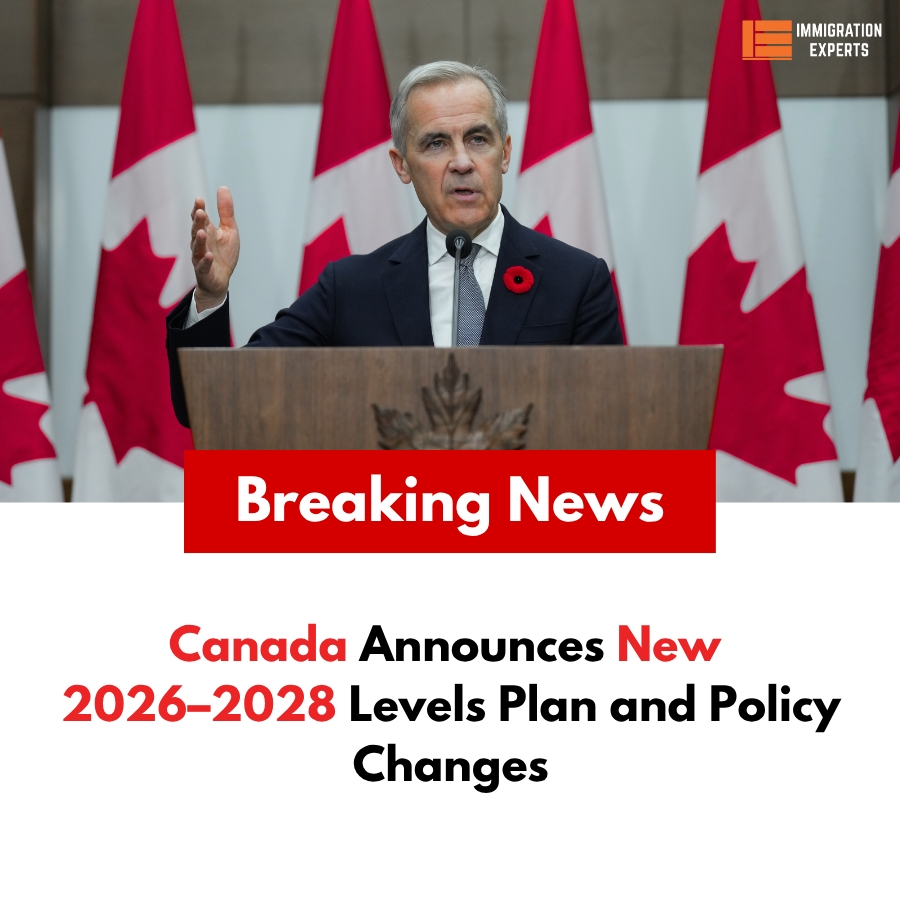
Canada has officially unveiled its Immigration Levels Plan for 2026–2028, setting out a strategy focused on stability, economic priorities, and better management of temporary residents. The plan, tabled alongside the 2025 federal budget, confirms an annual target of 380,000 permanent residents for the next three years — signaling a period of consolidation after years of record immigration growth.
| Category | 2026 | 2027 | 2028 |
|---|---|---|---|
| Total Permanent Residents (PRs) | 380,000 | 380,000 | 380,000 |
| Economic Class | 239,800 | 244,700 | 244,700 |
| Family Reunification | 84,000 | 81,000 | 81,000 |
| Humanitarian & Other | 56,200 | 54,300 | 54,300 |
| Francophone Admissions (Outside Quebec) | 9% (30,267) | 9.5% (31,825) | 10.5% (35,175) |
For temporary residents, the government projects:
Additionally, 33,000 temporary work-permit holders will transition to permanent residency over 2026–27.
After years of record-high immigration, Canada is opting for balance. The fixed annual target of 380,000 PRs indicates a strategic pause to ensure housing, healthcare, and infrastructure can catch up. This approach aims to integrate newcomers effectively without overburdening public systems.
Economic immigration will remain the backbone of Canada’s policy. In 2026, nearly 240,000 newcomers will enter through Express Entry and the Provincial Nominee Program (PNP) — addressing labour shortages in critical sectors such as construction, healthcare, technology, and skilled trades.
For the first time, Canada is formally incorporating temporary residents (international students + foreign workers) into its long-term planning.
The slight reduction from 385,000 to 370,000 temporary entries by 2027–28 reflects an effort to ease housing pressure while maintaining productivity and labour supply.
By targeting 10.5% francophone admissions outside Quebec by 2028, Canada is reinforcing its bilingual identity and supporting the growth of French-speaking communities across the country.
With an aging population and persistent skill shortages, the emphasis on economic immigration ensures that Canada continues to attract qualified professionals who can contribute immediately to national growth and innovation.
The stabilization of immigration numbers is directly tied to Canada’s housing crisis. The government’s aim is to maintain a sustainable population increase while provinces expand housing supply, public transit, and essential services.
Employers will benefit from predictable immigration flows but may face tighter labour supply if temporary foreign-worker quotas are enforced more strictly.
Post-secondary institutions will likely see reduced international enrolments, shifting focus from quantity to quality in student admissions.

The 2026–2028 Immigration Levels Plan marks a new chapter of balance and long-term vision. Canada’s message is clear:
“Immigration will remain a cornerstone of our growth — but we will manage it responsibly to align with our housing, labour, and economic realities.”
By focusing on steady PR targets, stronger economic pathways, and controlled temporary admissions, Canada is transitioning from rapid expansion to strategic sustainability.
For consultants, employers, and future applicants, this plan underscores three essentials:
Stay tuned as IRCC releases provincial allocations and category-specific details in early 2026, shaping the next phase of Canada’s immigration landscape.
